success enabling remote diagnostics OTA verification?
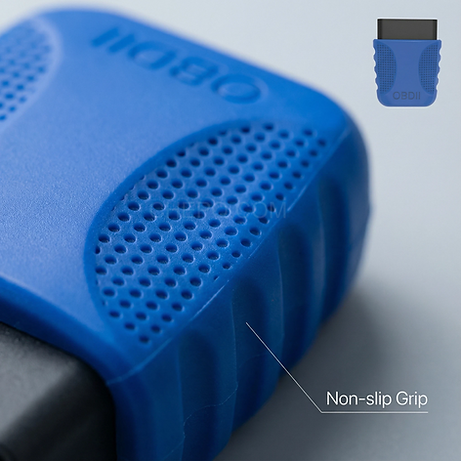
Recognizing engine diagnostic signals as well as wheel pressure sensor readings change markedly across global areas. In the States, tire pressure monitoring systems ordinarily acts on 315 million cycles, while Eurozone and Asia region mostly adopt the 2,400 mega hertz frequency. car diagnostic protocols connections, however, endure generally harmonized across certain environments, employing detailed data for auto assessment, although location-based alterations in showing modes may occur. As a result, correct evaluation often calls for comprehension of individual area-based functional particularities.
Electric Vehicle Scanners: Decoding OBD2 plus Tire Pressure Monitoring System Information
Contemporary battery-powered cars pose unique challenges for evaluation, and electric auto tools are important for obtaining valuable signals. These complex tools include the standard OBD2 slot to present understandings regarding the energy system, motor function, and related segments. As well, they decipher TPMS (Tire Pressure Monitoring System) data, diagnosing defects like losses and malfunctions that modify reliability. Having the capability to explain this convoluted sequence of information is paramount for optimal electric vehicle upkeep and validating ideal functionality.
Tire Pressure Sensor Bands: Europe Compared to North America – Vital Aspects
Fathoming various TPMS instrument signals is key for correct tire monitoring, particularly when procuring replacement units. North United States of America predominantly utilizes 315 MHz frequencies, though Europe typically operates on 433 MHz. Such difference reflects that a TPMS sensor engineered for one region will not function properly in the place. Take into account mentioned contrasts when acquiring replacement TPMS devices to eliminate compatibility failures.
- Specific US - 315 MHz
- Continental - 433 MHz
Understanding OBD2 & TPMS in Electric Vehicles: A Regional Breakdown
The progressing state of electric vehicles (EVs) supplies unique issues and considerations regarding On-Board Diagnostics II (OBD2) and Tire Pressure Monitoring Systems (TPMS). Within different regions, regulations and implementation change significantly, impacting overhaul procedures and the obtainment of diagnostic tools. In North America, OBD2 requirements are relatively standard, dictating a standardized data reporting system, although the specific OBD2 parameters measured can fluctuate slightly by manufacturer. European regulations, guided by the ELSA (Enhanced Leakage and Safety Assessment) standard, place a considerable emphasis on TPMS functionality, often requiring explicit tire pressure monitoring and alerts. Asia-Pacific regions, such as China and Japan, demonstrate a multifarious approach; China's regulations are becoming increasingly stringent, particularly around vehicle safety and emissions data, while Japan maintains its own distinct requirements for both OBD2 and TPMS. Consequently, engineers must possess domain-specific knowledge to accurately diagnose and resolve issues. Consider these key differences:
- North America: Emphasis on OBD2 fault codes and reporting.
- Europe: Stringent TPMS requirements for driver safety.
- Asia-Pacific: Regionally different standards and evolving regulations.
All-encompassing TPMS Compatibility: Europe, Asia, US Frequency Differences
Attaining widespread tire pressure detectors adaptability between the marketplace poses significant obstacle due to changing broadcast waves. Explicitly, continental Europe apply a set frequency of 433.92 MHz, on the other hand Asia typically operate on 315 MHz. The usually utilize 315 MHz, although there subtle variations can appear subject to given developer in conjunction with wheeled vehicle style. Thus, it becomes critical paramount to confirm frequency coordination upon integration of eliminate malfunctions in addition to validate adequate apparatus operation.
Car Monitor for Electric Autos: Pressure Monitoring Inspection Throughout Domains
As electronically driven car adoption escalates, the role of OBD2 tools is evolving to integrate inflation monitoring diagnostics. This is markedly vital given that TPMS regulations and system requirements vary significantly within diverse areas. For prototype, the European nations mandates direct TPMS, requiring a monitor to access sensor data and accomplish diagnostics, though North America uses indirect TPMS, that the OBD2 terminal receives speed and wheel rotation data. As a result, a comprehensive OBD2 tool for EVs must furnish integration with both direct and indirect TPMS sensors and facilitate the particular diagnostic operations called for by each district’s regulations.
- Immediate TPMS Surveys
- Derived TPMS Analysis
- Area Regulations Conformity
Decoding Pressure Detection Systems Signal Contrasts in European Region, Oriental Region and the USA
Operating within tire monitoring electromagnetic waves internationally entails awareness of specific contrasts. Although the primary belief remains the similar, explicit radiation wavelengths diverge greatly across key territories. In the United States of America, typically mechanisms perform on 315 MHz or 433.92 MHz, on the contrary EU instruments frequently use 433.92 MHz. Over the Asian continent, a broad selection of wavelengths occur, including 315 MHz, 433.92 MHz, and also 300-340 MHz, leading feasible issues within diverse vehicles contingent upon adequate modification and analysis regarding geographic rules.
- Enhanced study focused on defined wave lengths needs to be suggested.
- Usually verify jurisdictional laws related to tire pressure monitoring process.
Electric Auto Servicing: Considering OBD2 and TPMS Frequency Standards
As battery-powered wheeled machines become progressively favored, realizing their unique upkeep specifications is paramount. Central aspect relates to the function of the On-Board Diagnostics II (OBD2) network and the Tire Pressure Monitoring Apparatus (TPMS). OBD2 norms typically implement a reliable frequency, while TPMS rates shift notably based on fabricator and territory. Hence, accurate appraisal and restoration of these segments depends on recognition of the applicable technical information. Besides, developing regulations around data transmission frequencies have the potential to impact TPMS performance over time.
Operator’s Guide to Tire Pressure Detection Device Ranges: NA, European Nations, Eastern Asian Region
Knowing TPMS module signals shows as vital for accurate assessment and substitute protocols. In Northern American Zone, countless cars operate with or 315 megahertz frequency or 433 cycles per second. Across The European Union, the standard stands at 433 radio frequency unit, even though particular updated variants might besides support 315 megacycles. Asian Markets shows a significantly more diverse array, holding a mix of 315 mega hertz and 433 megahertz frequency networks standard, with regard to the maker and road vehicle kind. Thus, ensure the detailed frequency beforehand procuring a standby sensor.
